Question:
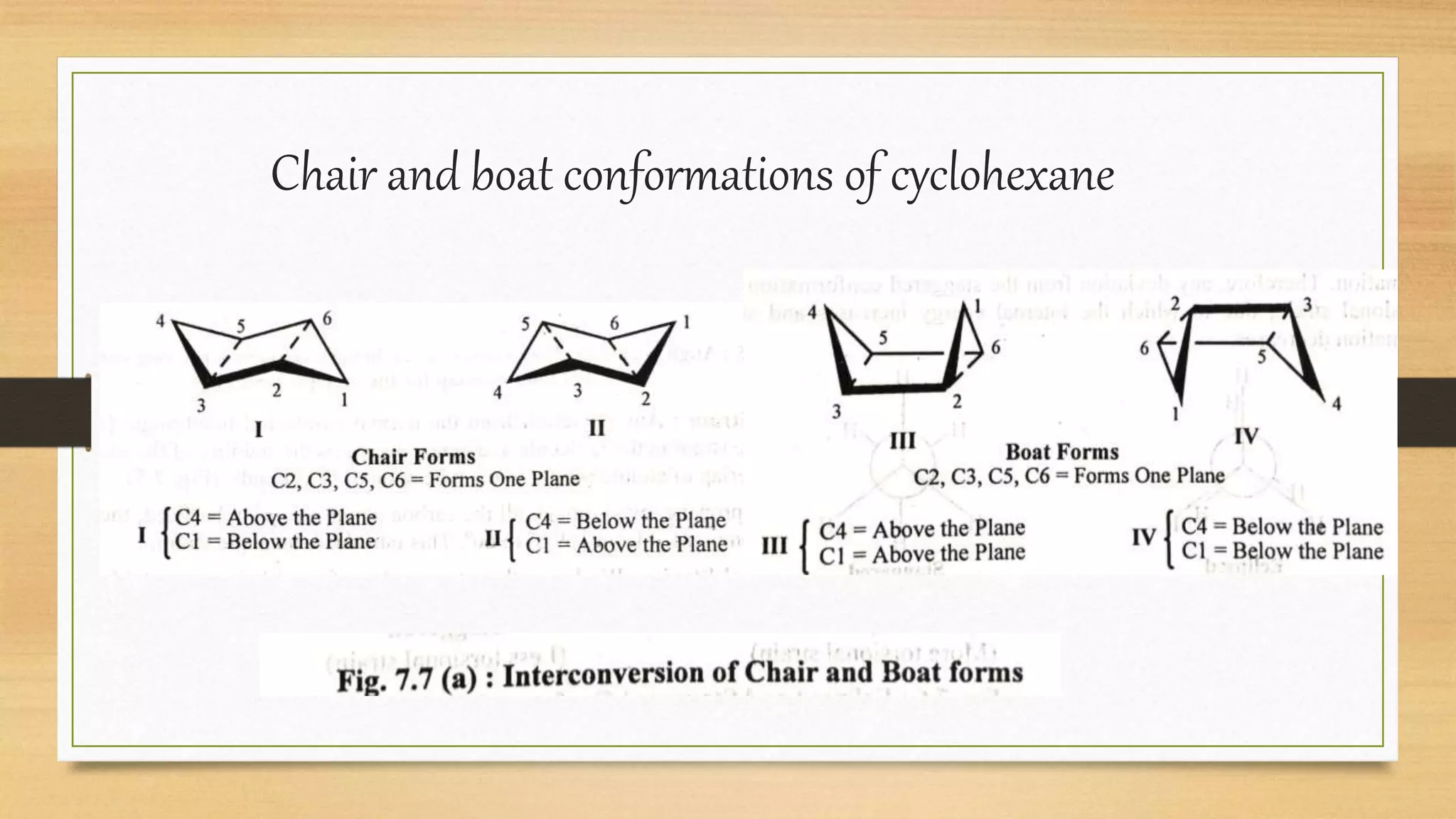
(a) Draw 2 main conformations of cyclohexane.
(b) Which conformation(s) is(/are the most stable)?
Question:
(a) Draw 2 main conformations of cyclohexane.
(b) Which conformation(s) is(/are the most stable)?
Solution:
(a)
(b) The chair one(s).
Note:
In boat form, steric hindrance and non-bonded H-H interaction occurs in 1,4 positions. In chair form, it is free from eclipsing interaction.
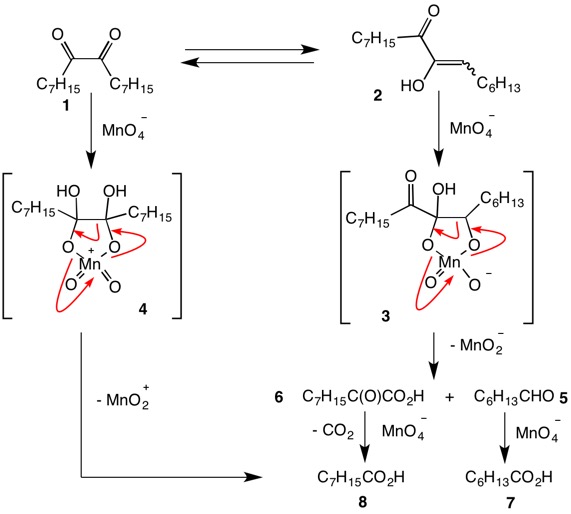
Question: Suggest the reaction mechanism for the oxidation of ethene into carboxylic acid by KMnO_4.
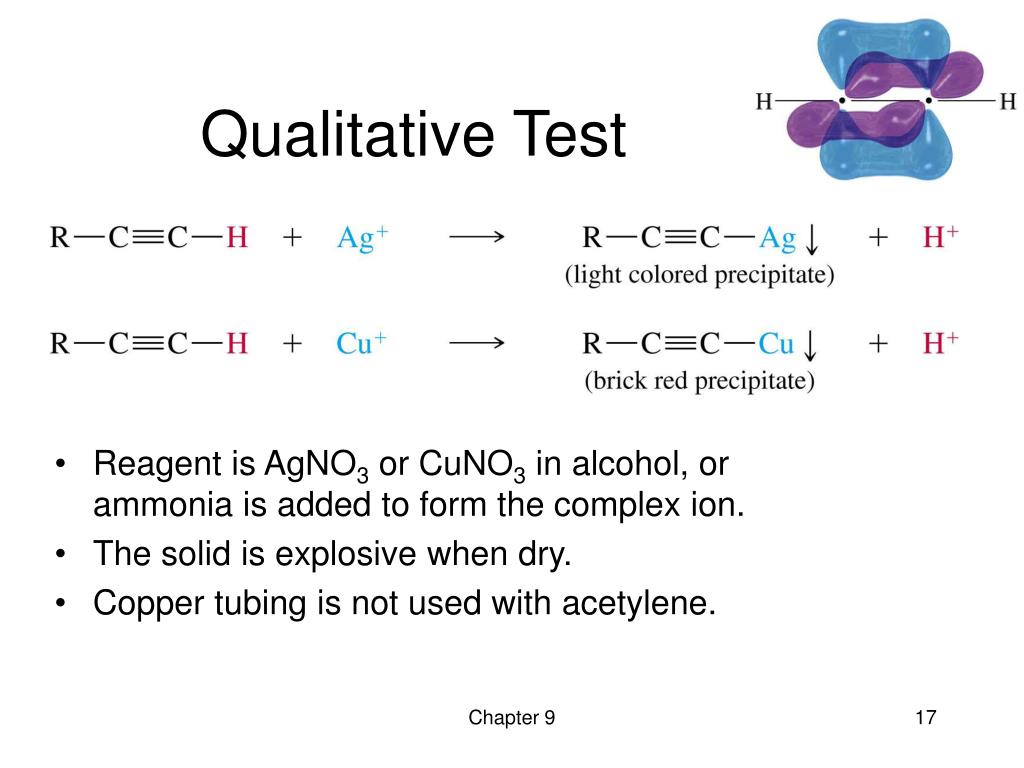
Question: How to distinguish between a disubstituted alkyne and a monosubstitited alkyne?
Question: How to distinguish between butan-2-ene and butan-1-ene?
Solution: Use acidified KMnO_4 with heating. Only butan-1-ene will give out CO_2 when the double C=C bond is broken.
Question: What is Saytzeff’s rule?
Solution:
Saytzeff’s rule (also known as Zaitsev's rule) states that in an elimination reaction, the major product is the most substituted alkene, meaning the one with the most alkyl groups attached to the double-bonded carbon atoms. [1, 2]
Key Concepts
Definition: During dehydrohalogenation (loss of an HX molecule from an alkyl halide) or dehydration (loss of water from an alcohol), a hydrogen atom is preferentially removed from the β-carbon that has the fewest hydrogen atoms. [1, 2]
Driving Force: More substituted alkenes are more thermodynamically stable due to hyperconjugation and better electron distribution from surrounding alkyl groups. [1]
Major vs. Minor Products: Removal of a proton from the more hindered/substituted β-carbon yields the stable Saytzeff product (major), while removal from the less substituted β-carbon yields the less stable Hofmann product (minor). [1]
Example: Elimination of 2-Bromobutane
When 2-bromobutane reacts with a base, elimination can happen in two ways: [1]
Removing a hydrogen from C-1 yields but-1-ene (monosubstituted, minor product).
Removing a hydrogen from C-3 yields but-2-ene (disubstituted, major/Saytzeff product). [1, 2]
Exceptions
Question: Hence, account for the exceptions of the above rule.
Solution:
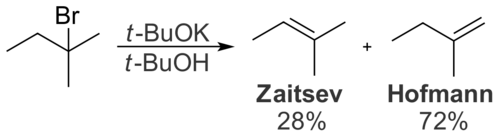
In E2 elimination reactions, a base abstracts a proton that is beta to a leaving group, such as a halide. The removal of the proton and the loss of the leaving group occur in a single, concerted step to form a new double bond. When a small, unhindered base – such as sodium hydroxide, sodium methoxide, or sodium ethoxide – is used for an E2 elimination, the Zaytsev product is typically favored over the least substituted alkene, known as the Hofmann product. For example, treating 2-Bromo-2-methyl butane with sodium ethoxide in ethanol produces the Zaytsev product with moderate selectivity.[9]
Due to steric interactions, a bulky base – such as potassium tert-butoxide, triethylamine, or 2,6-lutidine – cannot readily abstract the proton that would lead to the Zaytsev product. In these situations, a less sterically hindered proton is preferentially abstracted instead. As a result, the Hofmann product is typically favored when using bulky bases. When 2-Bromo-2-methyl butane is treated with potassium tert-butoxide instead of sodium ethoxide, the Hofmann product is favored.[10]
Steric interactions within the substrate also prevent the formation of the Zaytsev product. These intramolecular interactions are relevant to the distribution of products in the Hofmann elimination reaction, which converts amines to alkenes. In the Hofmann elimination, treatment of a quaternary ammonium iodide salt with silver oxide produces hydroxide ions, which act as a base and eliminate the tertiary amine to give an alkene.[11]
In the Hofmann elimination, the least substituted alkene is typically favored due to intramolecular steric interactions. The quaternary ammonium group is large, and interactions with alkyl groups on the rest of the molecule are undesirable. As a result, the conformation necessary for the formation of the Zaytsev product is less energetically favorable than the conformation required for the formation of the Hofmann product. As a result, the Hofmann product is formed preferentially. The Cope elimination is very similar to the Hofmann elimination in principle but occurs under milder conditions. It also favors the formation of the Hofmann product, and for the same reasons.[12]
In some cases, the stereochemistry of the starting material can prevent the formation of the Zaytsev product. For example, when menthyl chloride is treated with sodium ethoxide, the Hofmann product is formed exclusively,[13] but in very low yield:[14]
This result is due to the stereochemistry of the starting material. E2 eliminations require anti-periplanar geometry, in which the proton and leaving group lie on opposite sides of the C-C bond, but in the same plane. When menthyl chloride is drawn in the chair conformation, it is easy to explain the unusual product distribution.
Formation of the Zaytsev product requires elimination at the 2-position, but the isopropyl group – not the proton – is anti-periplanar to the chloride leaving group; this makes elimination at the 2-position impossible. In order for the Hofmann product to form, elimination must occur at the 6-position. Because the proton at this position has the correct orientation relative to the leaving group, elimination can and does occur. As a result, this particular reaction produces only the Hofmann product.
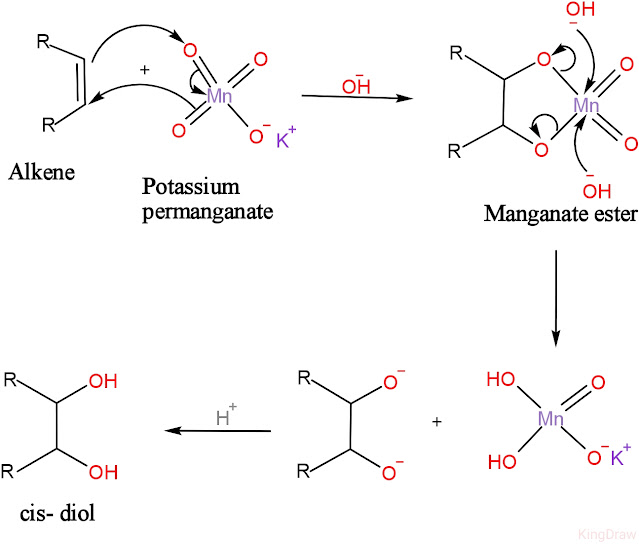
Question: What will happen if an alkene is immersed in cold KMnO_4 under alkalikne conditions?
Solution:
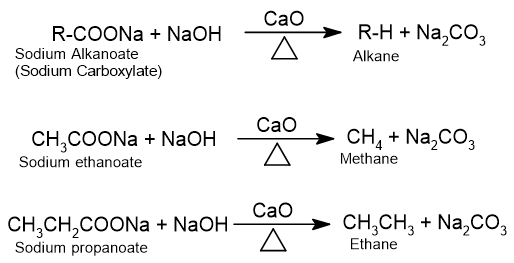
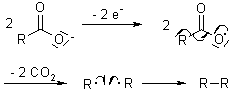
The reaction you are referring to is the Kolbe decarboxylation (specifically, thermal decarboxylation of a carboxylic acid salt with soda lime, which is a mix of NaOH and CaO).
The overall reaction is:
\text{R-COONa}+\text{NaOH}\xrightarrow{\Delta ,\text{CaO}}\text{R-H}+\text{Na}_{2}\text{CO}_{3}
Here is the step-by-step mechanism of this reaction.
If starting from a carboxylic acid, the base (OH⁻) removes the acidic proton to form a carboxylate anion and water. If starting directly with the sodium salt (R-COONa), this step is already complete.
At high temperatures, a hydroxide ion (OH⁻) acts as a nucleophile and attacks the electrophilic carbonyl carbon of the carboxylate ion.
This breaks the C=O pi bond, pushing the electron pair onto the oxygen atom.
This creates a temporary, negatively charged tetrahedral intermediate.
The tetrahedral intermediate collapses.
The lone pair on the oxygen reforms the C=O double bond.
Instead of kicking the hydroxide back off, the high thermal energy forces the alkyl group (R) to leave, breaking the relatively weak C-C bond.
This releases a molecule of sodium bicarbonate (NaHCO₃) and generates a highly reactive carbanion intermediate (R⁻).
The strongly basic carbanion (R⁻) immediately abstracts a proton (H⁺) from either the water molecule formed in step 1 or from the bicarbonate ion.
This protonation yields the final stable alkane (R-H).
The remaining inorganic products combine to form sodium carbonate (Na₂CO₃).
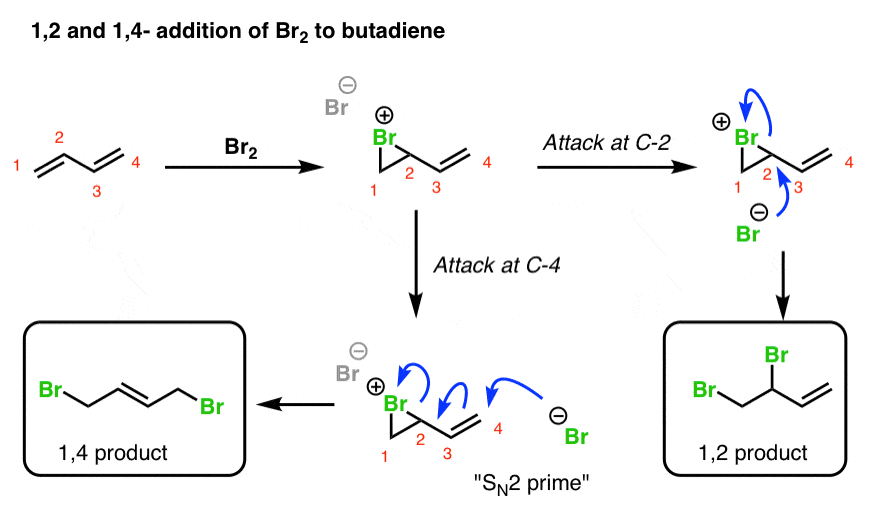
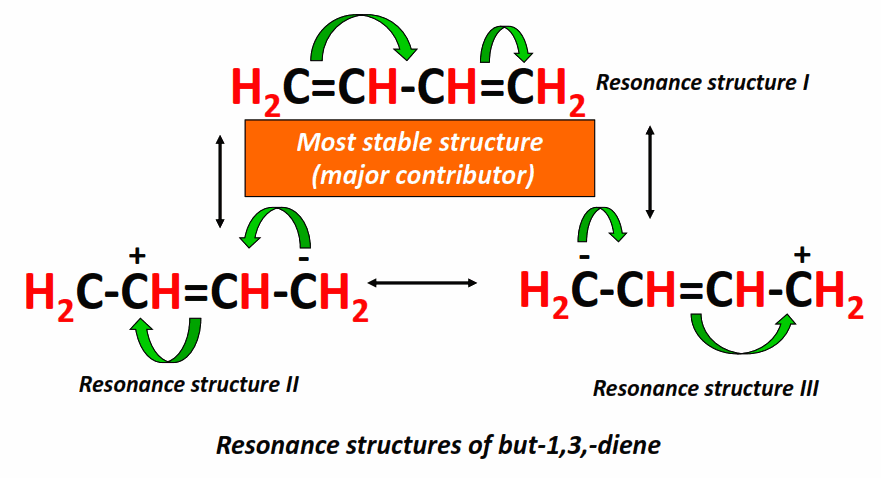
Question: Bromination of buta-1,3,-diene gives different prodcuts. Explain briefly.
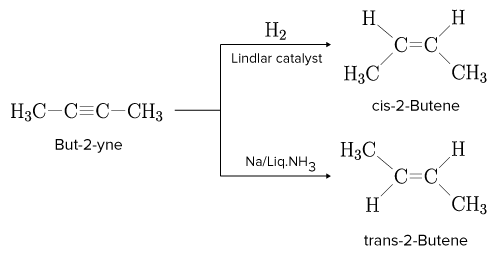
The partial catalytic hydrogenation of but-2-yne yields cis-but-2-ene (Z-isomer) via syn-addition, while dissolving metal reduction yields trans-but-2-ene (E-isomer) via anti-addition. [1, 2]
Hydrogenation and Isomer Stereoselectivity
Cis-Addition (Lindlar's Catalyst):
Anti-Addition (Dissolving Metal):
Reaction Mechanisms
Catalytic Hydrogenation (Syn Addition)
Adsorption: But-2-yne adsorbs onto the metal catalyst surface face-down.
First Hydrogen Transfer: Surface-bound hydrogen is transferred to one of the sp-hybridized carbons to form a semi-hydrogenated cis-alkenyl (vinylic) surface intermediate. [1]
Second Hydrogen Transfer: A second hydrogen atom transfers from the metal surface to the same side of the double bond before bond rotation can occur, releasing cis-but-2-ene. [1]
Dissolving Metal Reduction (Anti Addition)
Single Electron Transfer (SET): Sodium transfers an electron to the alkyne \pi ^{*} orbital, forming a radical anion intermediate.
Protonation: The radical anion abstracts a proton from ammonia (\text{NH}_{3}) to form a vinylic radical.
Second SET & Protonation: A second electron transfer generates a vinylic carbanion, which rapidly adopts the more stable trans-configuration (minimizing steric repulsion of methyl groups) before final protonation yields trans-but-2-ene. [1]