Question:
Denote m_1 and m_2 as the slope of straight lines L_1 abd L_2 respectively. Explain why when they are perpendicular to each other, m_1m_2 = -1.
Solution: Recall the tangent of phase angle between 2 lines:
Since tan(\pi/2) = \infty, this only happens when the denominator is 0, i.e.
Q.E.D.
Question:
Hence, discuss how tan(\theta_1 - \theta_2) is defined.
Solution:
Recall sinx/cosx=tanx, then:
Divide both expressions by cos(\theta_1)cos(\theta_2), then the result is straightforward.
Question:
Define dot product in terms of matrix. What happens if it is zero?
Solution:
Transform the equation of straight Line L_1, L_2 into matrix form:
Then the dot product is:
which is equivalent to:
Since |L_1| > 0 and |L_2| > 0, when the dot product is zero, we have cos(\theta_1-\theta_2) = 0, i.e.:
Q.E.D.
Question:
Prove De Moivre's Theorem.
Solution:
De Moivre's Theorem states that:
Recall Euler's formula:
Then:
By multiplication of indics:
Done.
Question:
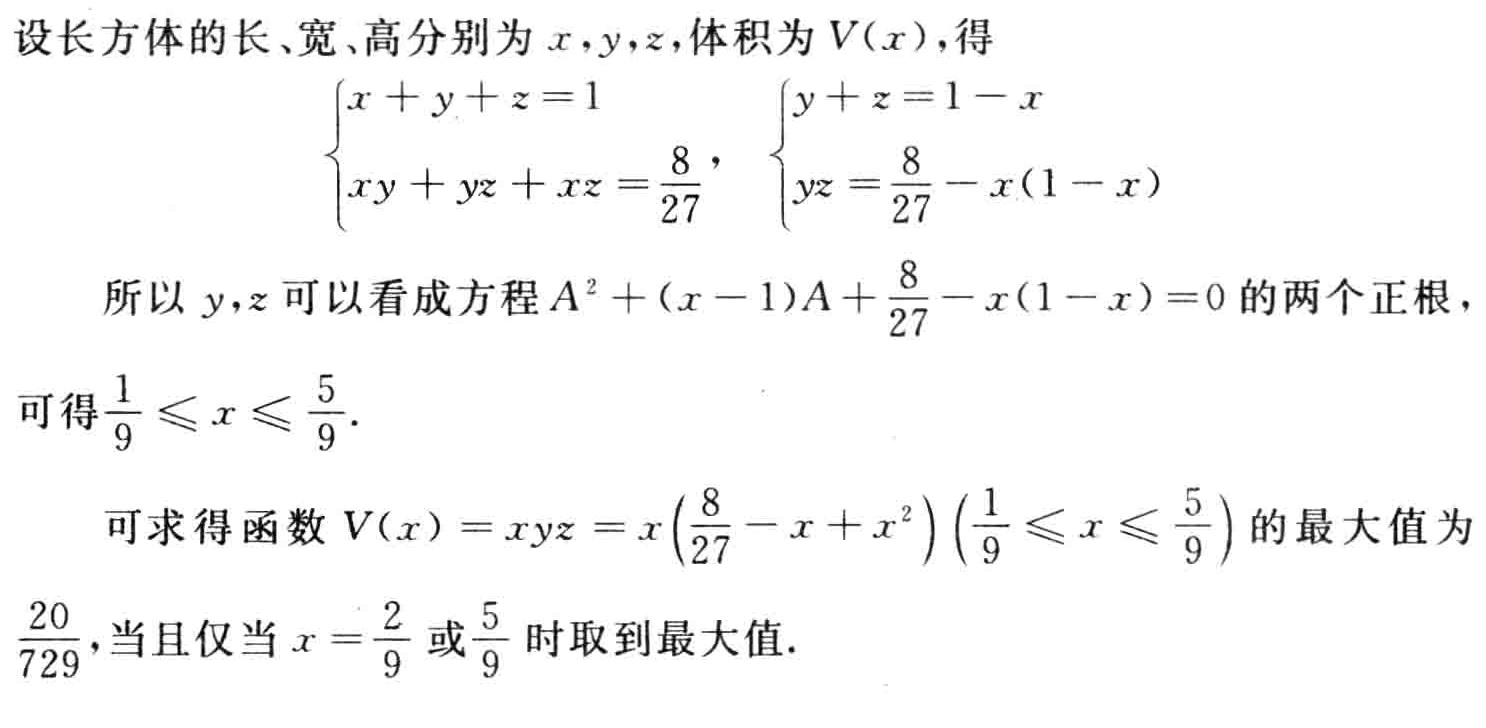
Given a rectangle that:
Find the maximum volume.
Question:
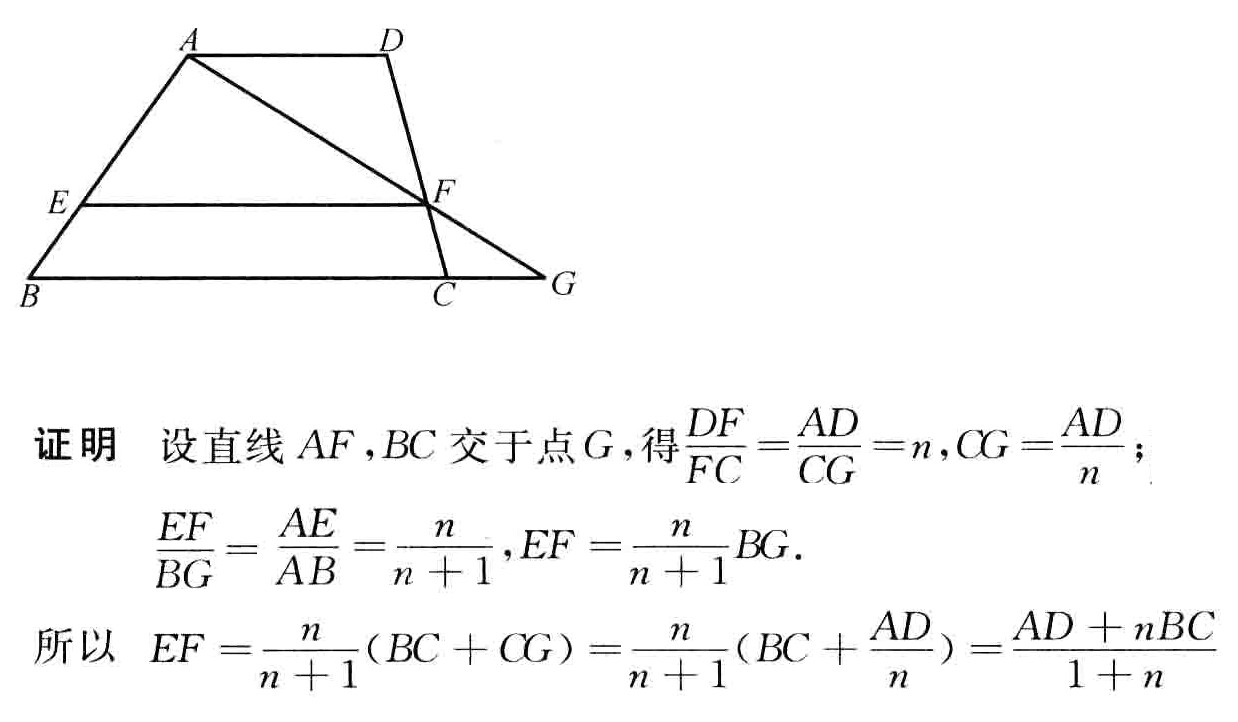
On a trapezium ABCD, there is a line EF lying on AB and DC respectively such that AD//EF//BC. If AE/EB = DF/FC = n, prove that:
Question: Study the dialogue below:
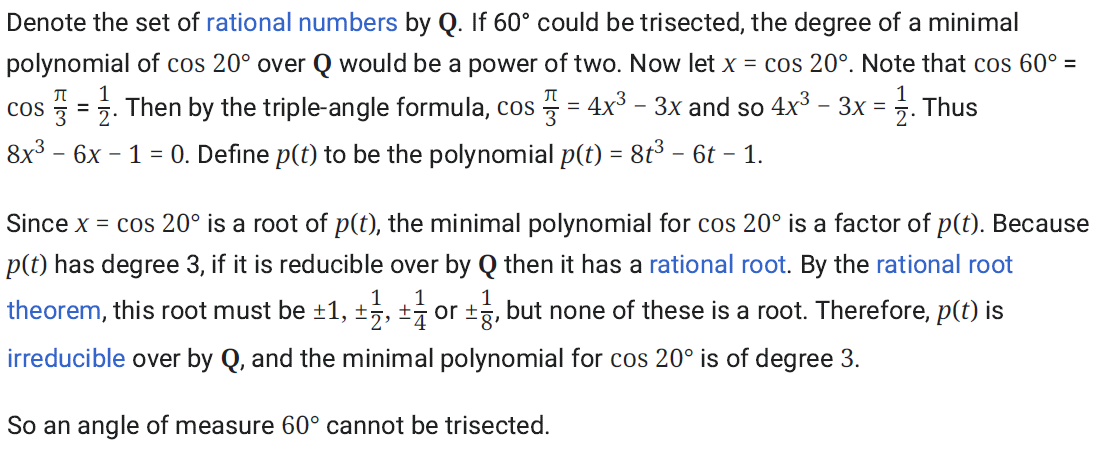
LEGO: I want to trisect an angle of 60 degree.
DutalaTortoise: You must be on9.
Prove that LEGO is on9.
Question:
A student tries to use AM-GM inequality:
for all unequal x_n .
He puts x_1=1 and x_2=-1 such that:
0 > i or 0 > -i
What's wrong with his manipulation?
Solution:
He did not notice the constraint that:
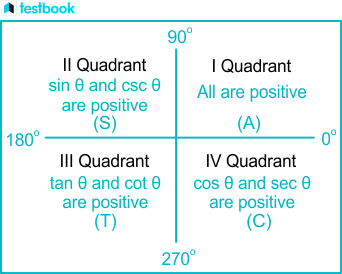
Hence, you cannot put any trigonometry functions on the inequality above unless you make sure that the domain guarantees positive real values (for example, sine and cosine in the first quadrant).