Question:
Prove thr triangle inequalities that:
a+b>c
a+c>b
b+c>a
Where a,b,c are the magitides of the sides of any triangle.
Question:
Prove thr triangle inequalities that:
a+b>c
a+c>b
b+c>a
Where a,b,c are the magitides of the sides of any triangle.
Solution:
Note that:
a>0
b>0
c>0
and a+b+c = the perimeter of the triangle > 0.
Now we shall prove by contrapositive, i.e. assuming the opposite propositions are true:
a+b<c
a+c<b
b+c<a
adding up the 3 proposed inequality, we now have:
2 (a+b+c) < a+b+c
i.e. a+b+c < 0. Contradiction!
Q.E.D.
Another question commonplace in tech giant interviews:
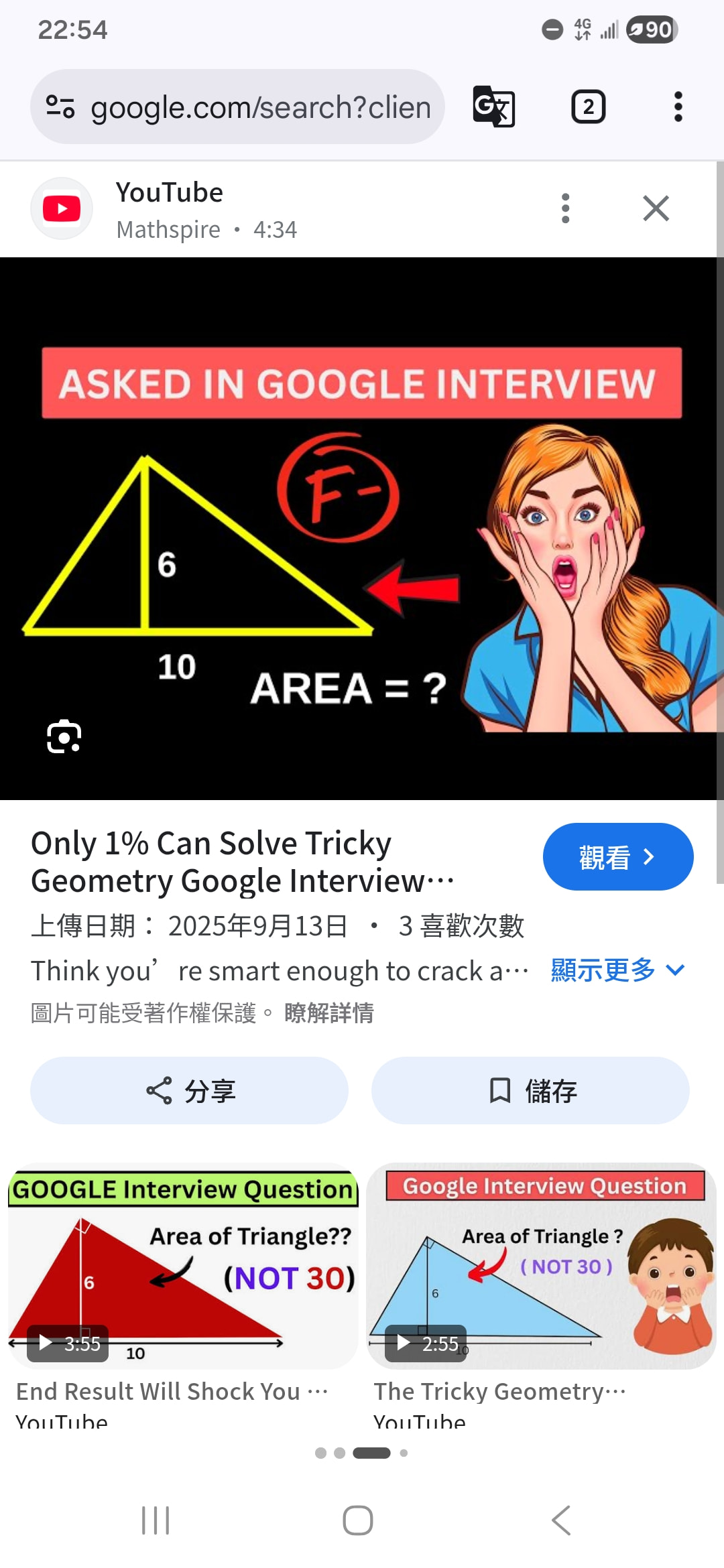
Now the motherfucking Google interviewer is asking you to compute the area of the triangle above. Give your answer.
Solution:
For every sexuality-stricken students taking CE or DSE mathematics from 2006 onward, in Junior Secondary 3 courses you should have heard what circumcentre is. Also, from Secondary 4 mathematics courses you should have enough Euclidean geometry knowledge on circles. Now consider the triangle above, if the triangle have the base side of the greatest magnitude being the diameter of the circumcircle, the triangle must be right-angled and the side of magnitude 6 units must be the radius of the circumcircle of maximum magnitude 5 units, i.e. half of the diameter. Therefore, the given triangle does not exist.
Many Indian code monkeys simply compute 30 square units and then are screened off instantly from the first-round interviews.
Another question:
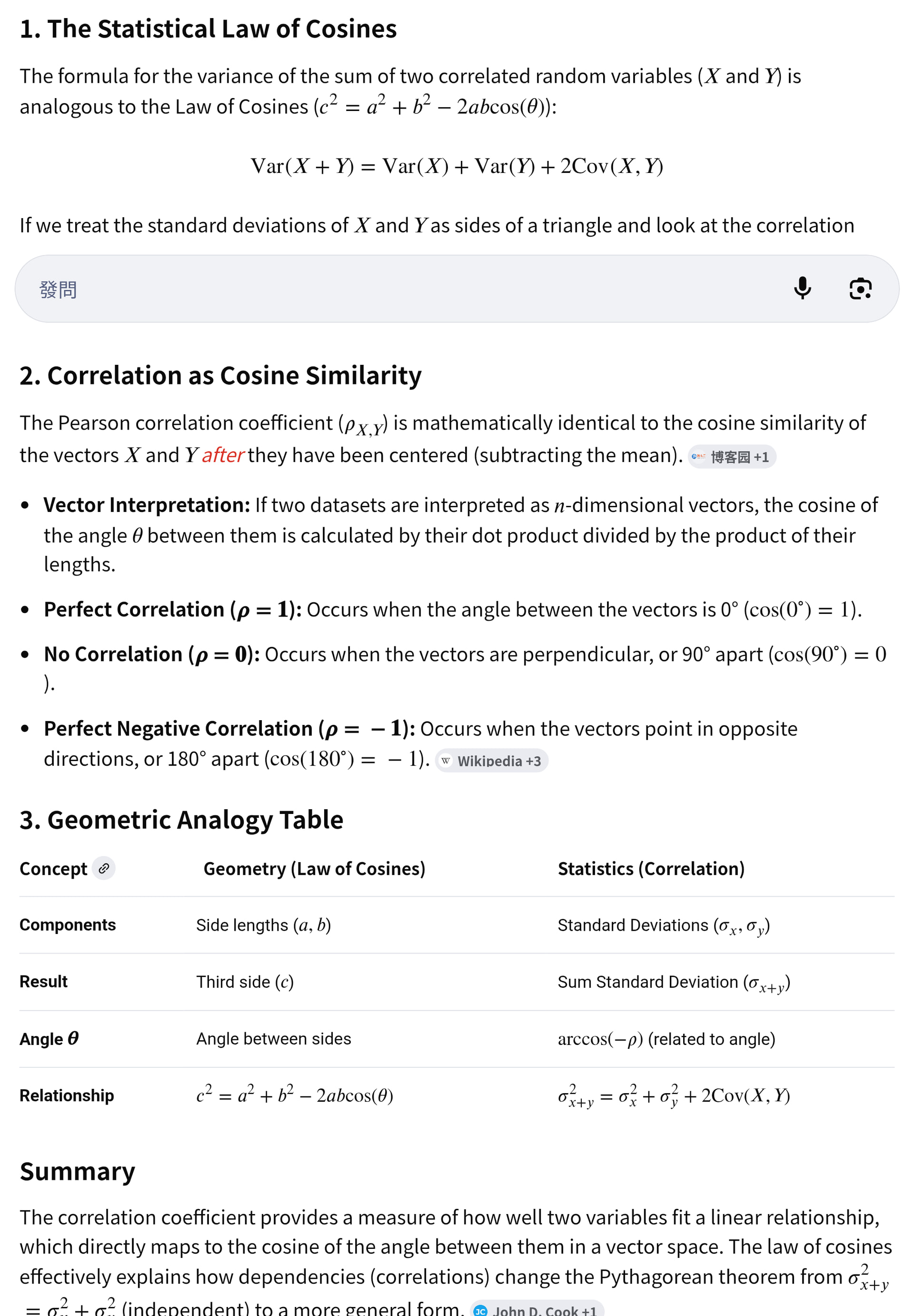
A Taiwanese university has held an entrance examination for budding freshmen asking the candidates to write an essay on ONE the applications to trigonometry on statistics. Write out your response in no more than 5 minutes.
Solution:
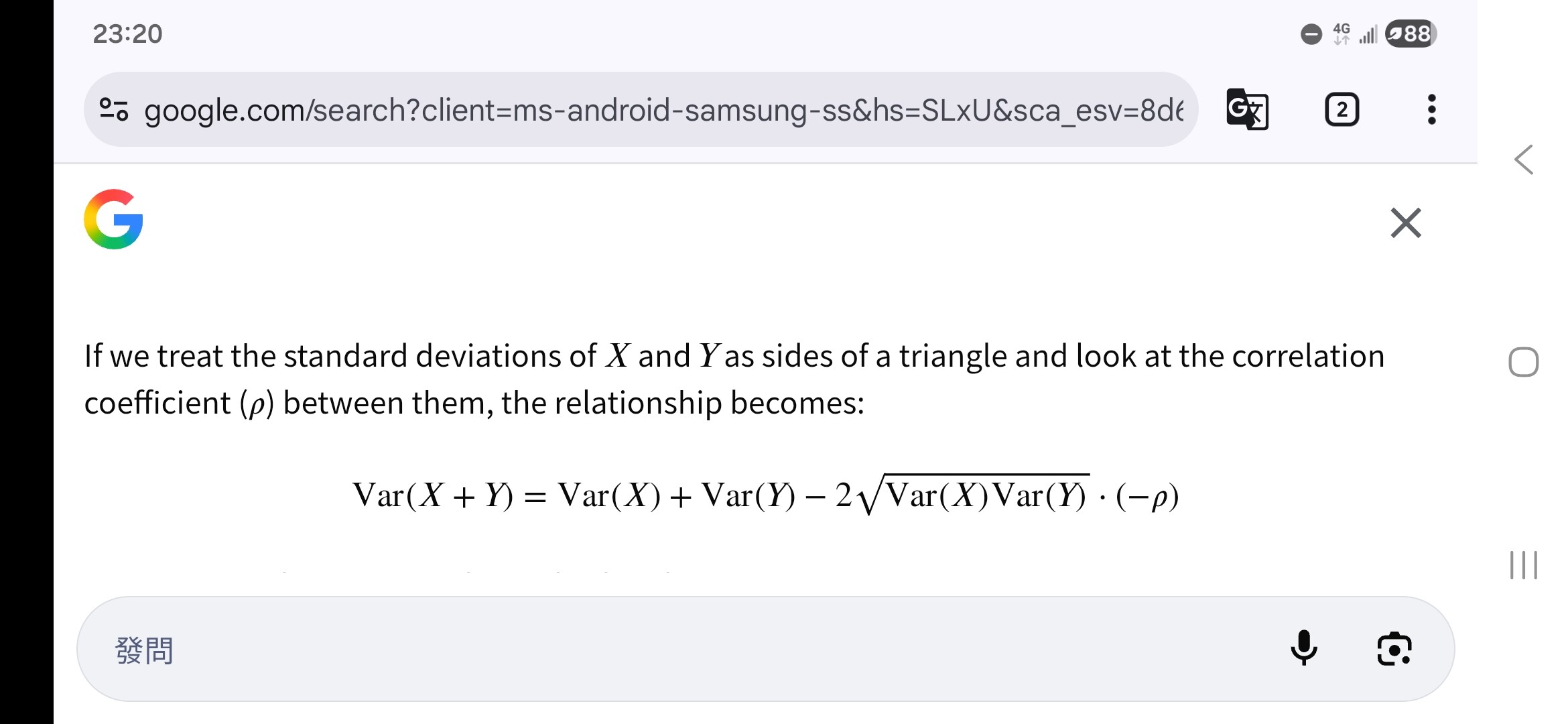
Students should be able to use AI to generate any desired response. Below is an example:
The hidden contents:
Note that you can also solve the above Google interview question on the triangle by analytical methods. Take the longest side as the diameter, then the circumcircle will pass through all 3 edges of the triangle, forming a right-angled triangle. You can use the ratio of similar triangles and optimization techniques to obtain the local maximum, i.e. radius=5.
I shall show the complete workout in later stage.
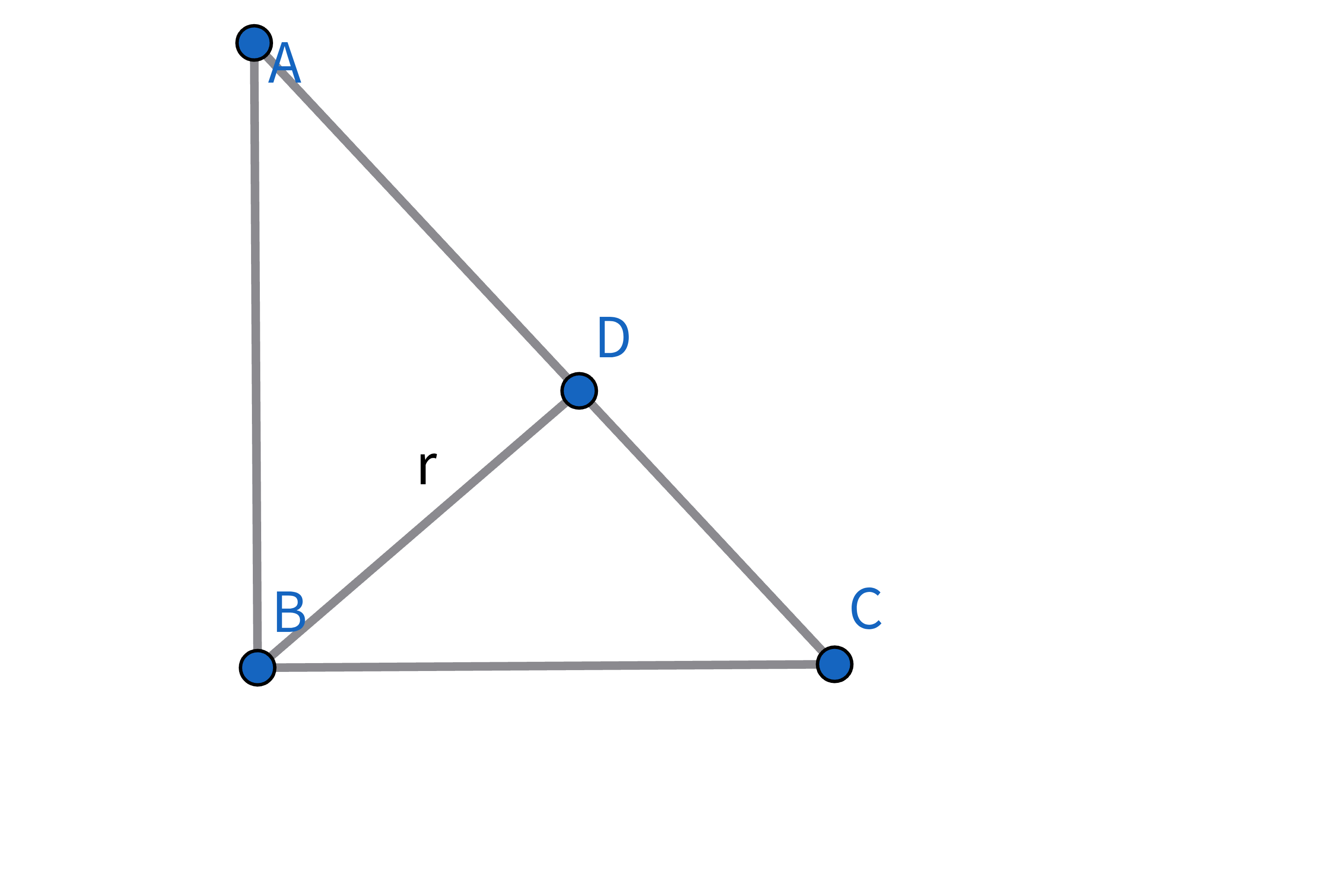
First, we draw the triangle:
Given the diameter AC = 10 and BD = r , and angle BDC is 90 degree. For the area of the triangle being the maximum inside the circumcircle, the angle ABC must be also 90 degree. By the ratio of similar triangles, denoting AB = s and BC = t, we have:
r = st/10
It is equivalent to the area of the right-angled triangle divided by the diameter. By optimization, r is the greatest when s=t, then we have 10=2r, i.e. AD=DC, then D must be the center of the circumcircle.
Q.E.D.
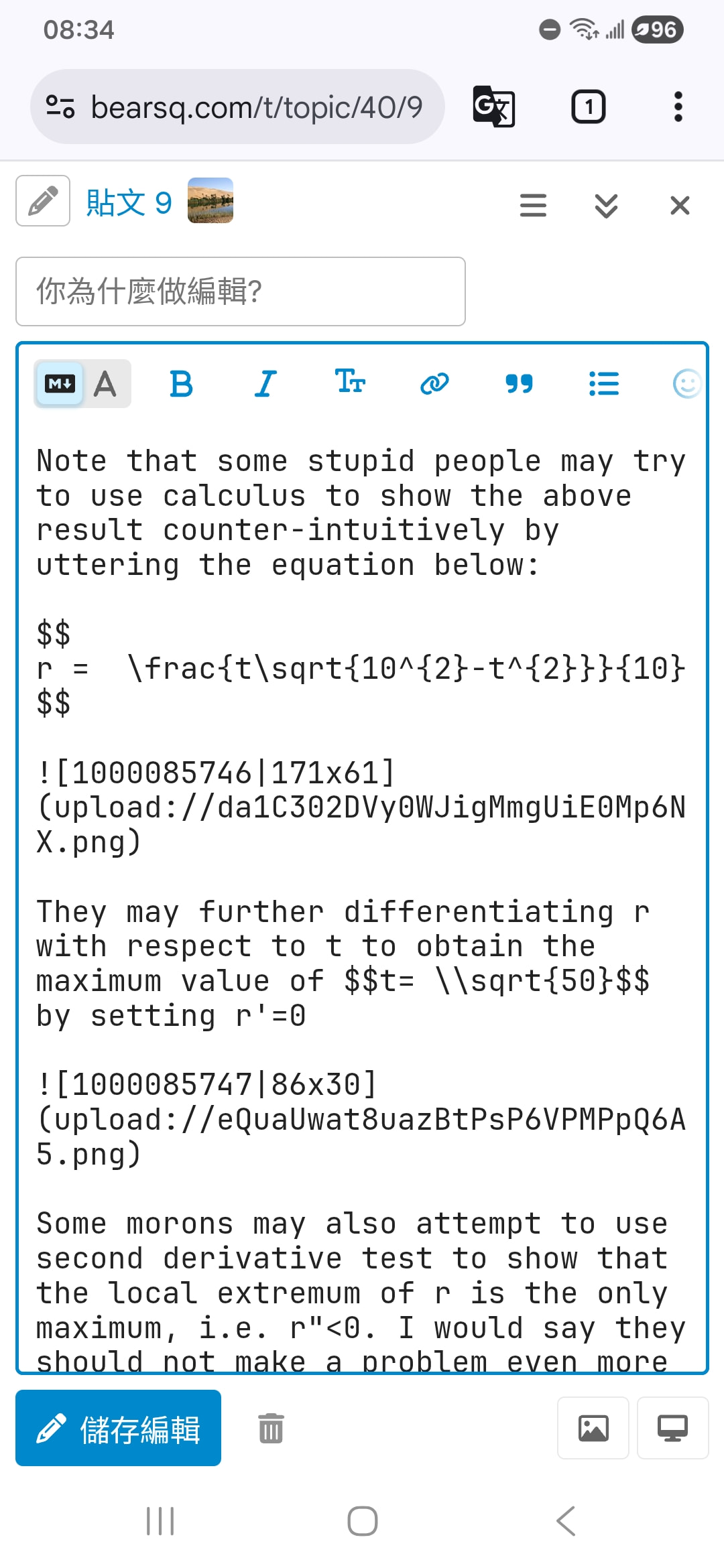
Note that some stupid people may try to use calculus to show the above result counter-intuitively by uttering the equation below:

They may further differentiating r with respect to t to obtain the maximum value of $$ t= \sqrt{50} $$ by setting r'=0

Some morons may also attempt to use second derivative test to show that the local extremum of r is the only maximum, i.e. r"<0. I would say they should not make a problem even more complicated.
To webmaster: My LaTeX codes above is not working.
Hey, I updated it for you!
Just wanted to let you know you missed a few dollar signs.
Now we have an open question:
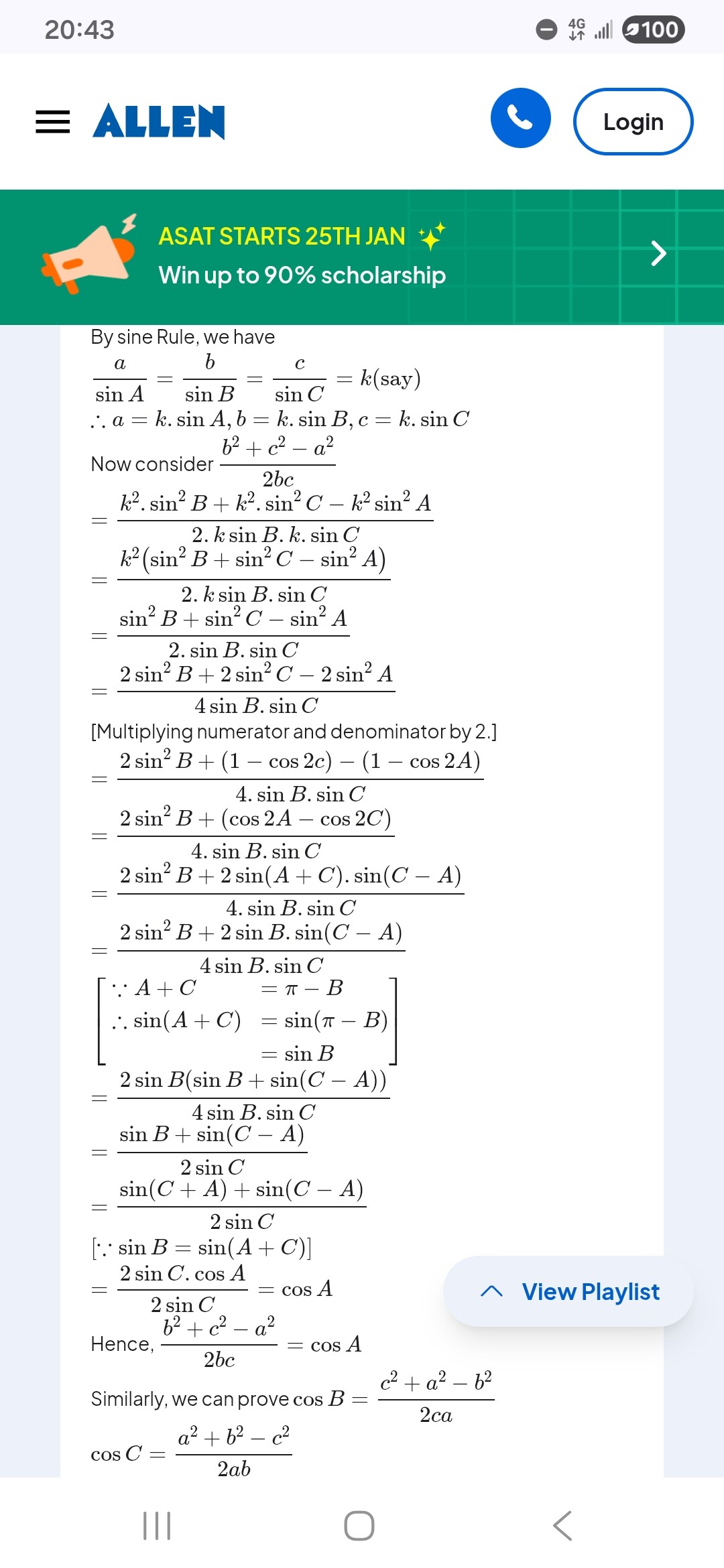
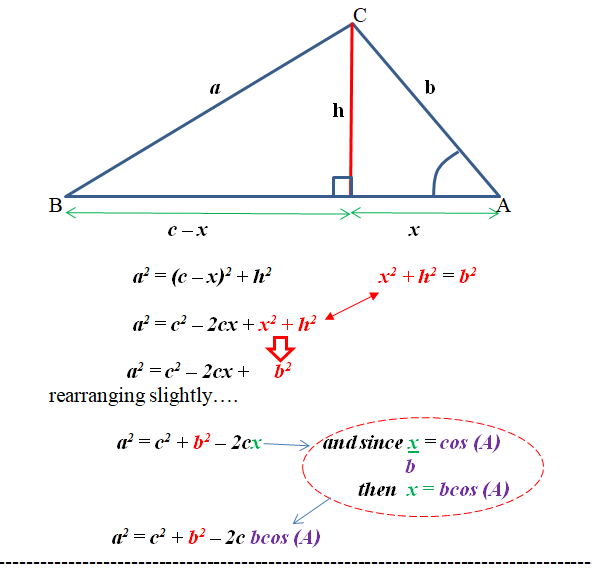
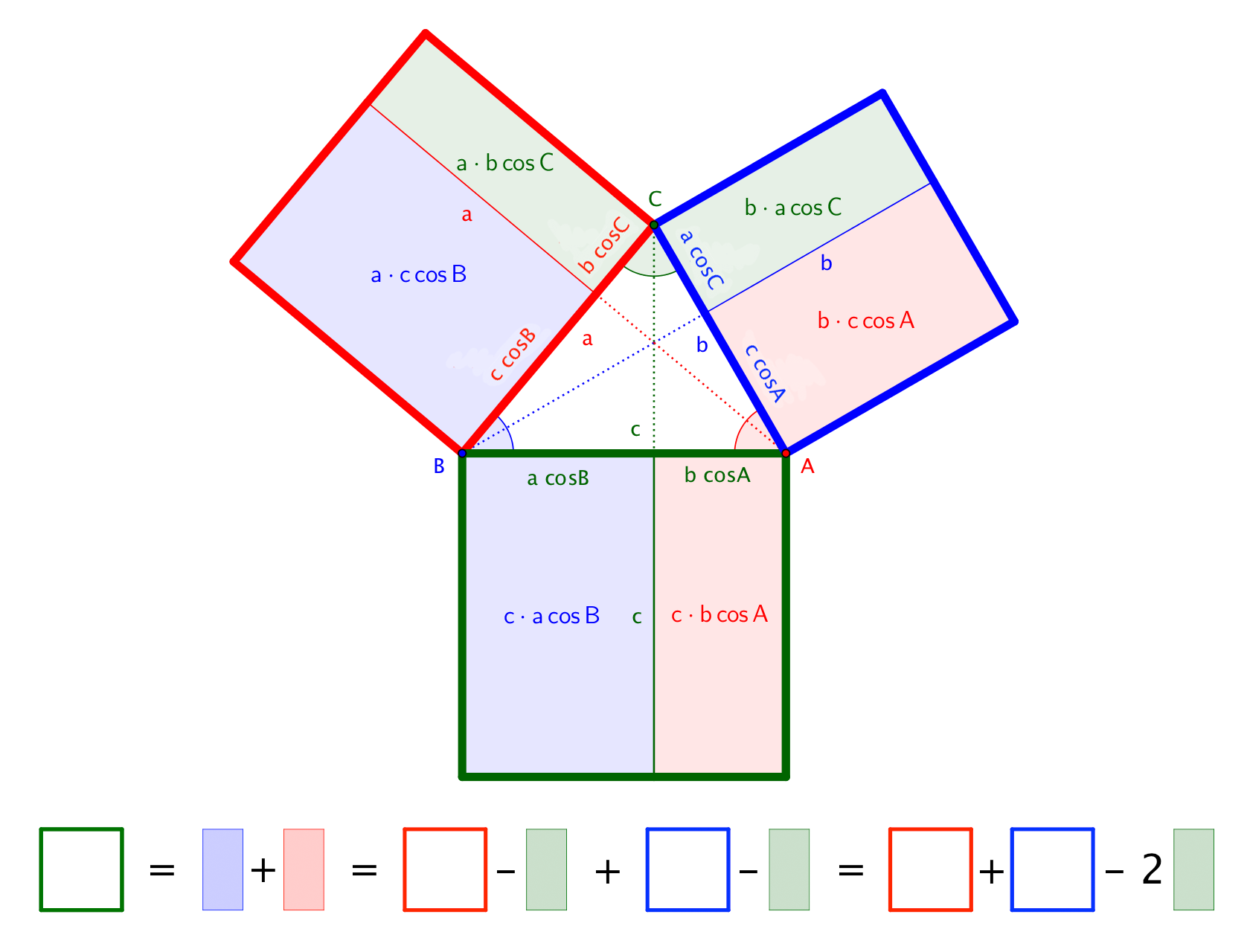
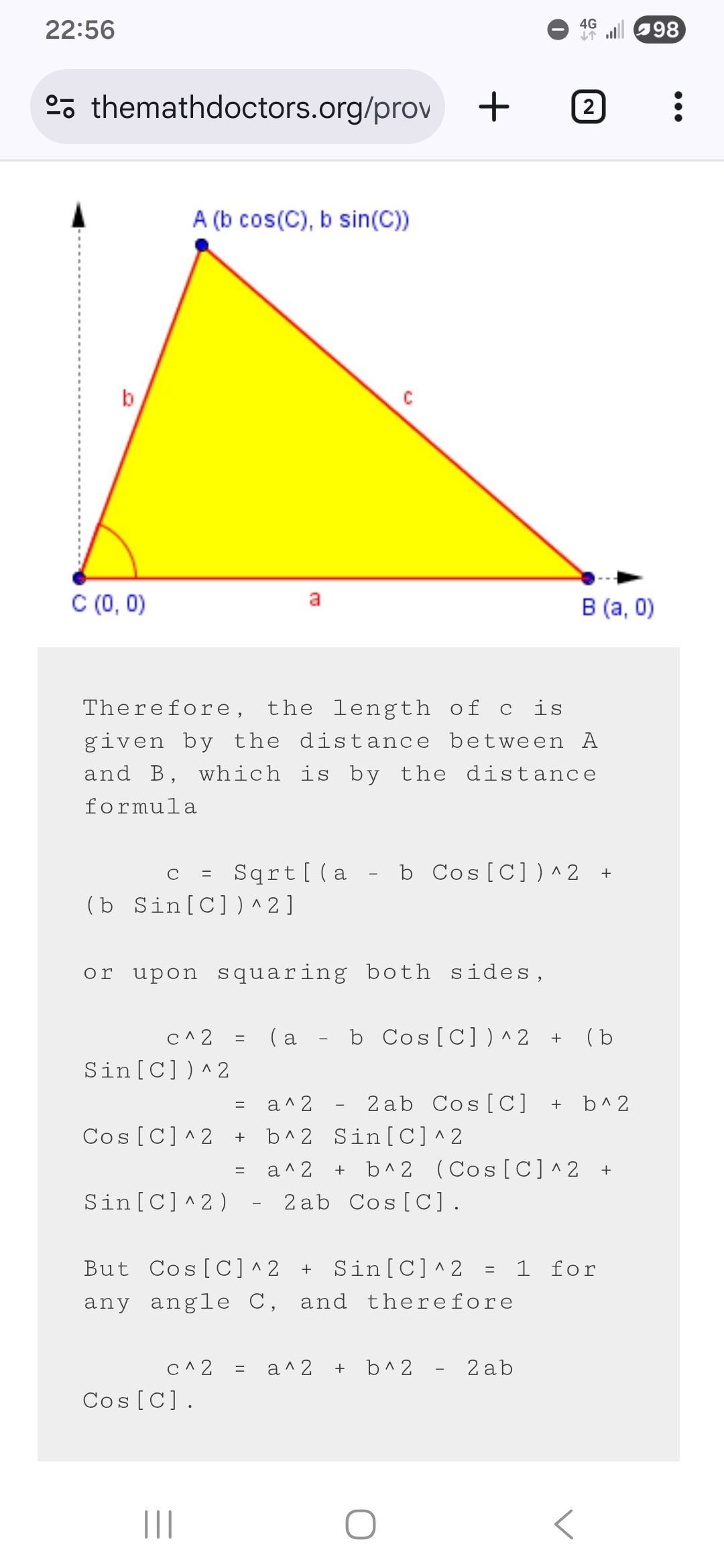
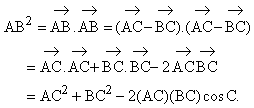
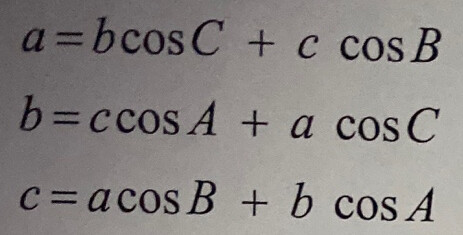
By take-home Internet searches, suggest at least 4 methods to prove the cosine law.