Square Root of Complex Numbers - GeeksforGeeks
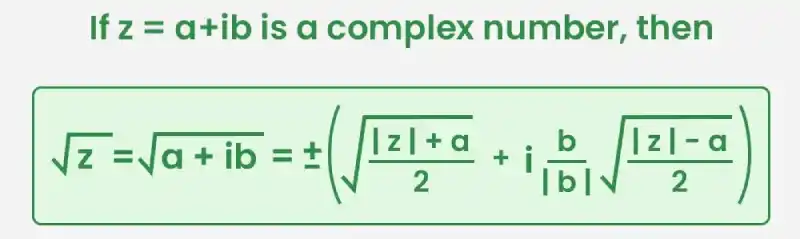
\sqrt{-4} = ±2i
Square Root of Complex Numbers - GeeksforGeeks
\sqrt{-4} = ±2i
Try this:
If z=e^{ix},
show that i^i is real.
Try also this:
Consider the discussion below:
ln(-1)= ln(i^2) = 2ln(i)
and since i^2 = i^6,
we have ln(-1) = 6ln(i)
and thus 2ln(i)=6ln(i),
i.e. ln(i) = 0
What's wrong with the result above?
Another question:
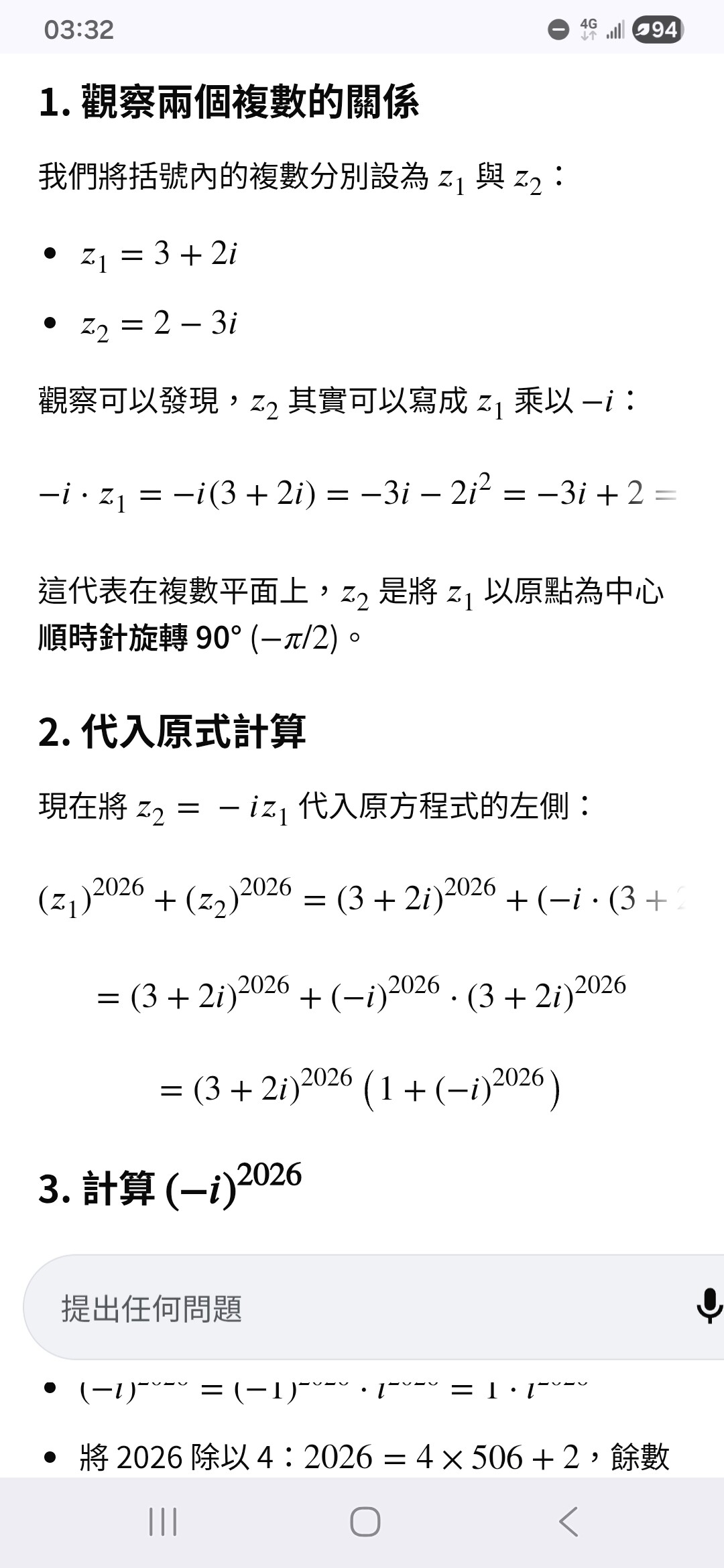
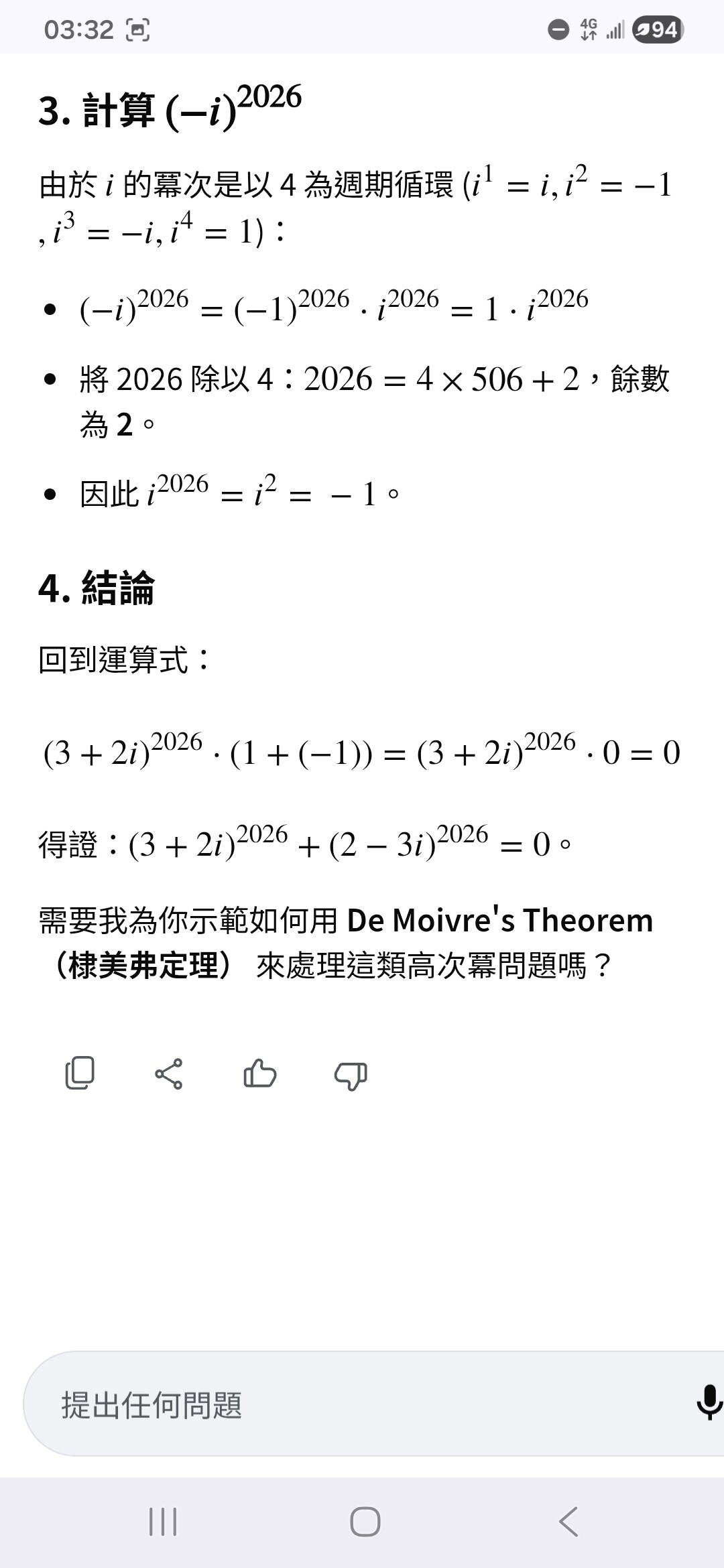
Show that (3+2i)^{2026} + (2-3i)^{2026} =0
Solution:
This question requires Argand Diagram which is out of HKDSE Syllabus.
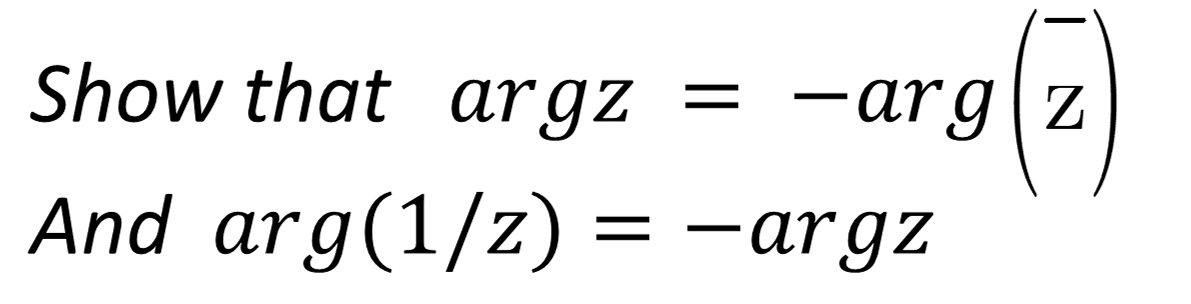
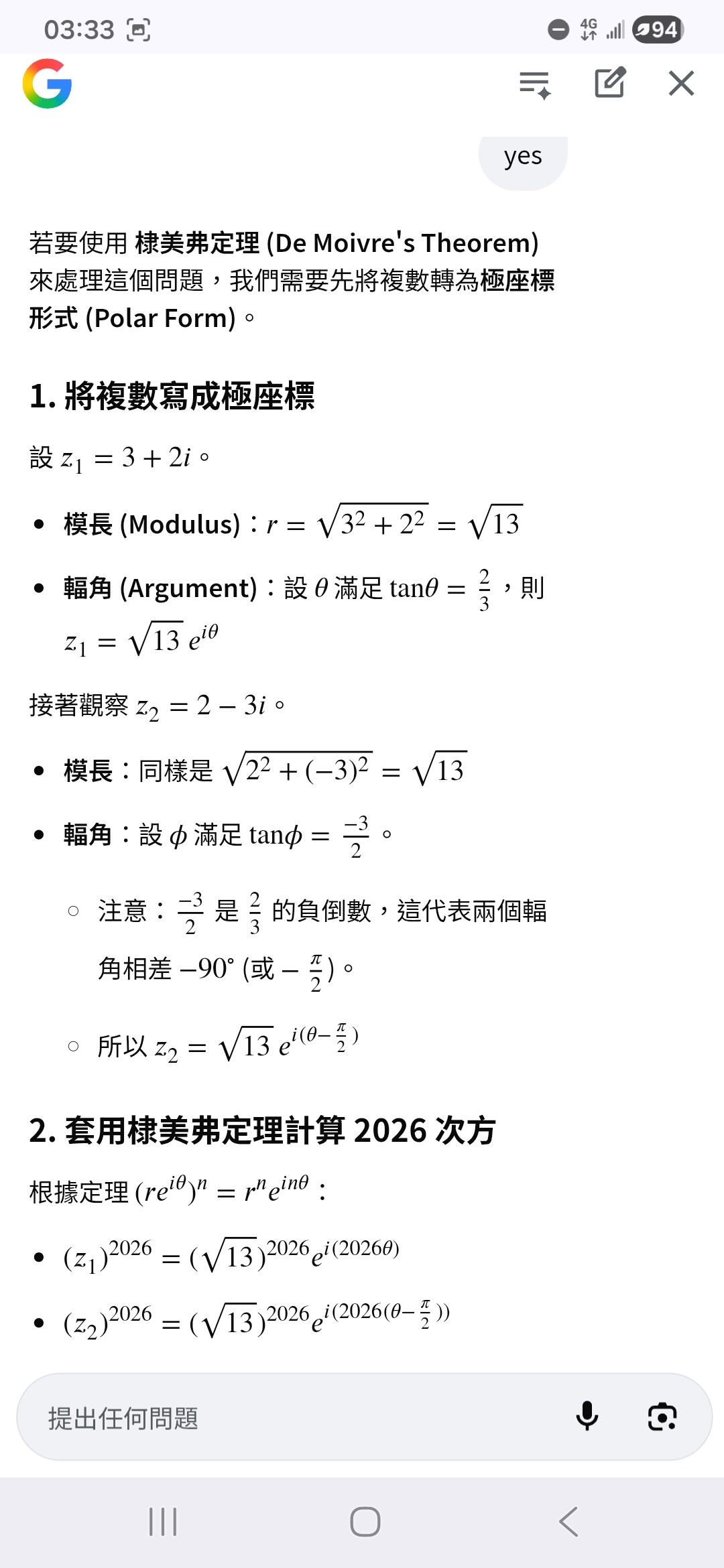
The magnitudes of tbe 2 complex numbers are the same. Now note the arguments of below complex numbers:
Arg(3+2i)=tan^{-1}(2/3)
Arg(2-3i)=tan^{-1}(-3/2)
Now your turn:
I reiterate, below operation is out of HKDSE Syllabus and should not appear in live paper without sufficient reading materials prescribed:
Note that for z^n=r^ne^{inx},
x is the argument.
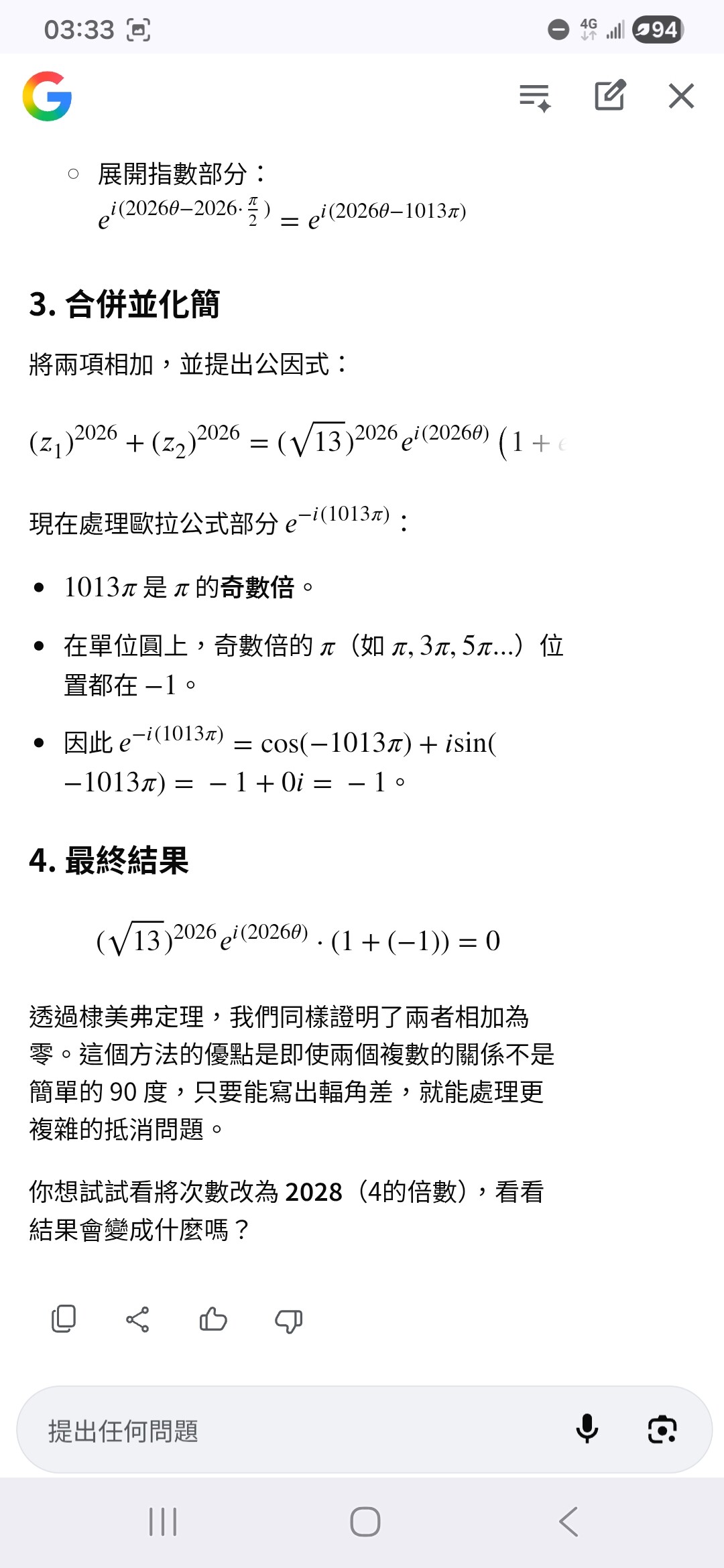
Now it is sufficient to show that the sum of the 2 given complex numbers is zero.
Q.E.D.
Postscript:
HKDSE won't teach de Moivre's theorem.
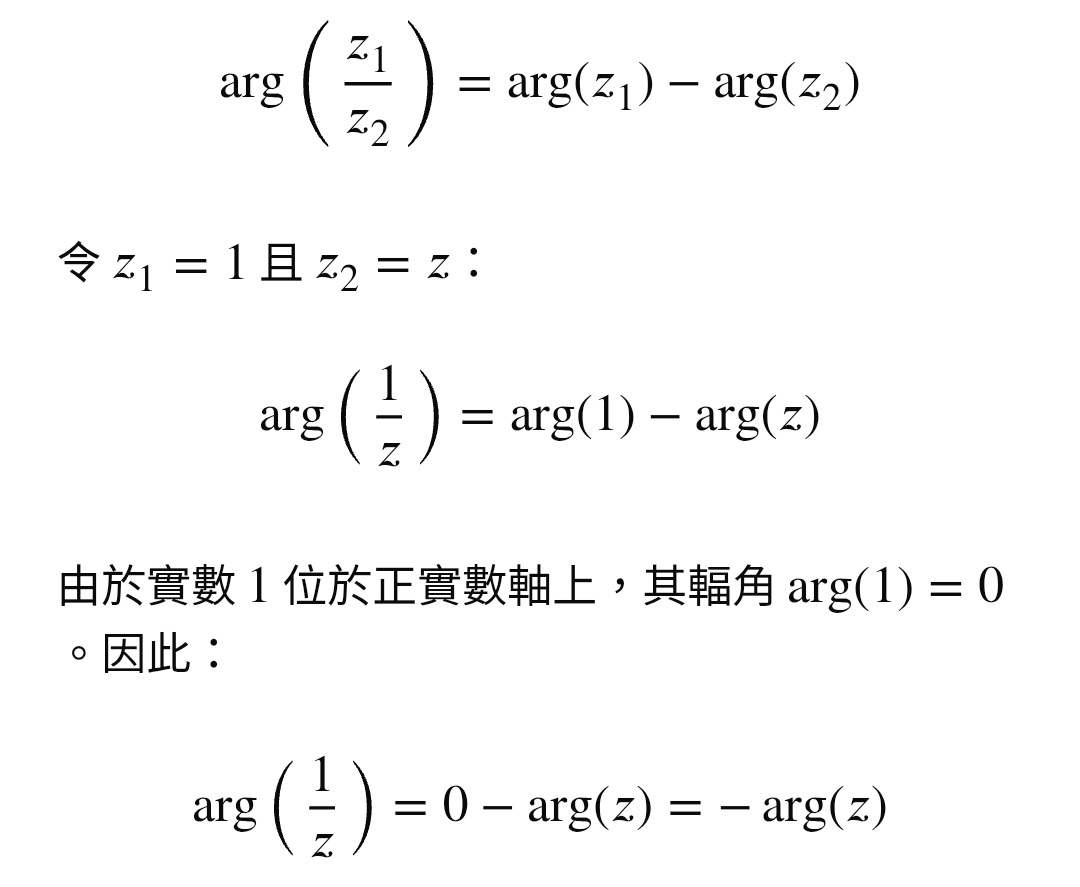
Full solution:
The above process involves transformation of complex numbers which will only appear in HKALE Pure Mathematics.
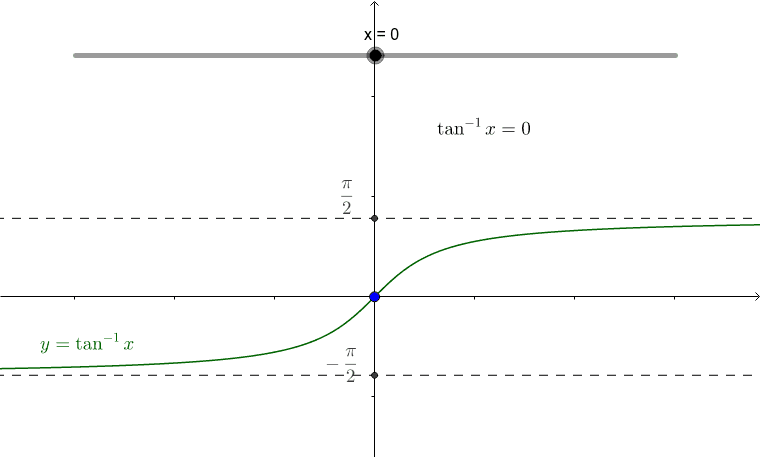
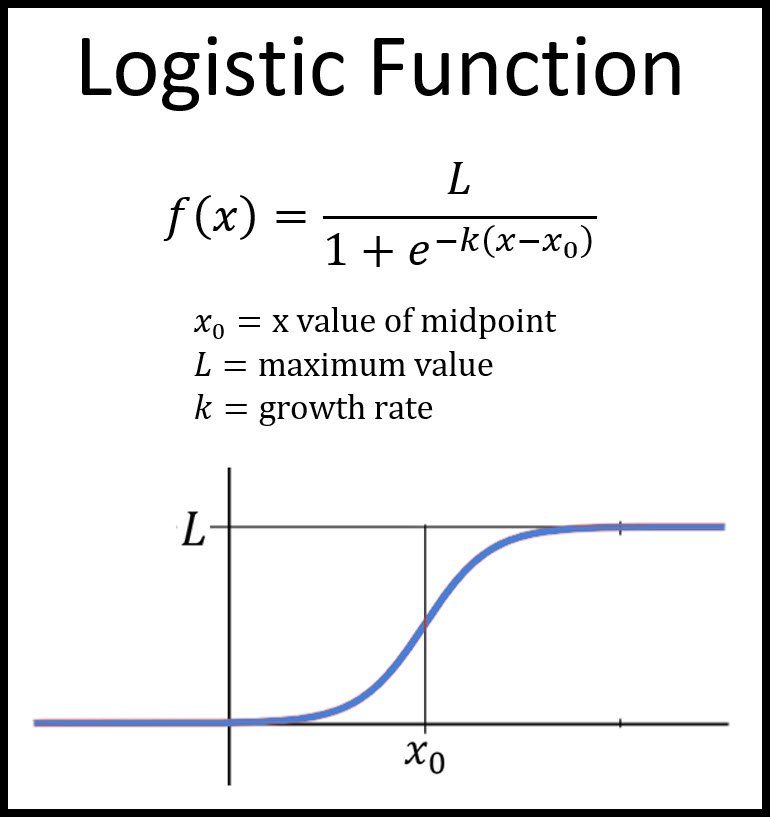
If you have studied econometrics, you will find that the curve of y=atan(x) resembles logistic functions:
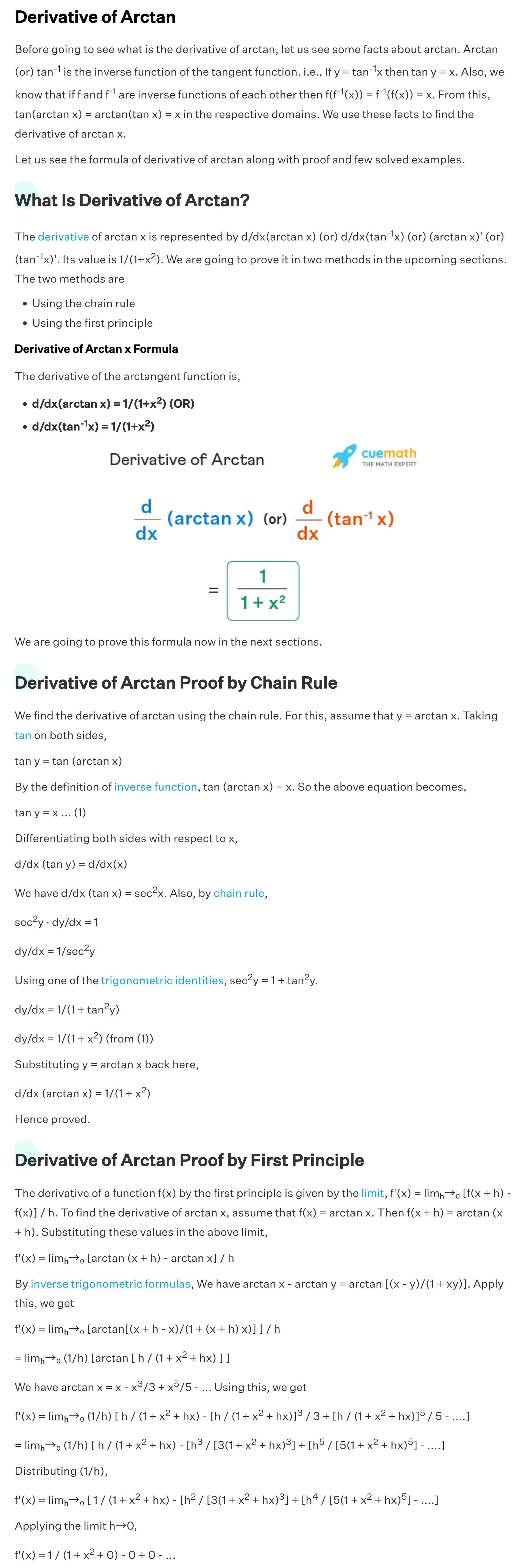
Now, try to show that y'=\frac{1}{x^2+1}.
Solution:
Complex logarithms are NOT injective. You can't treat them like real logarithms.
Solution:
i=e^{\frac{iπ}{2}}
Then the outcome is straightforward.